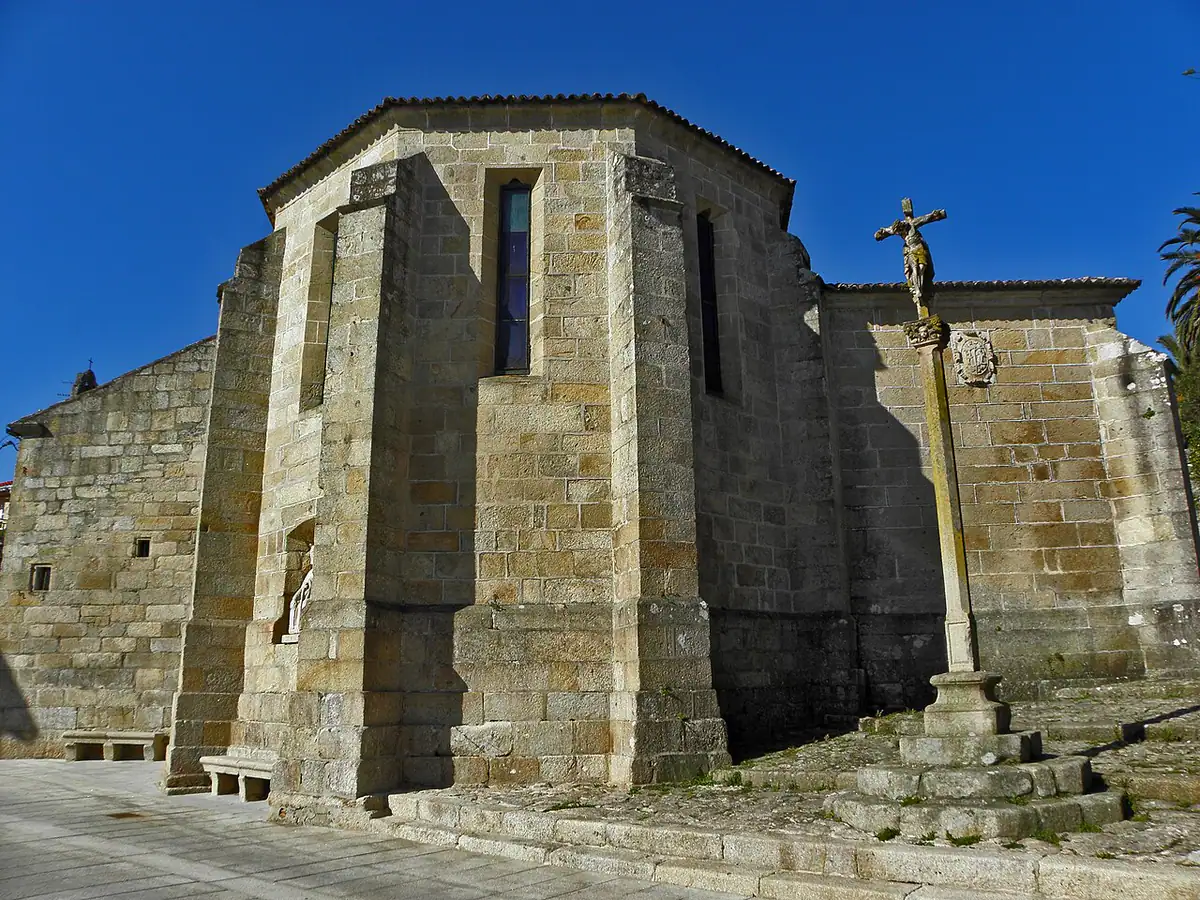
Church of Santiago da Pobra do Deán (A Pobra do Caramiñal)
The parish church of Santiago, on Rúa Díaz de Rábago in A Pobra do Caramiñal, was built in stages over more than four centuries. According to Turismo de Galicia, work began at the end of the 14th century with the main chapel.
History
Construction began at the end of the 14th century with the main chapel and continued over the following centuries until 1825, when the chapel of La Soledad was built.
Architecture
The church has a central nave, main chapel, baptistery, seven chapels and a sacristy. The walls are of granite ashlar and the tiled roof has two slopes, except over the chancel, where it has six.
The main façade is symmetrical: a large rectangular doorway between two niches, with a third niche above holding images, flanked by two large windows. At the top rises the bell tower, square in plan with two stages, four piers joined by arches and a crowning dome. At the ends of the roof stand two figures of musicians, one with a guitar and one with a flute.
At the ends of the roof stand two figures of musicians, one with a guitar and one with a flute.
Interior
The nave is divided into five bays by pointed transverse arches carrying a depressed barrel vault. The apse, Gothic and polygonal, is covered by a pointed vault with nine ribs. Of note are the Sacro chapel, with a rib vault, and the Alba chapel, from the late 15th century.
How to get there from the Camino
The church is in the centre of A Pobra do Caramiñal, at Rúa Díaz de Rábago, 18. The town is one of the stages of the Camino da Orixe across O Barbanza.
What to see nearby
-
MuseumProtected heritage (BIC)
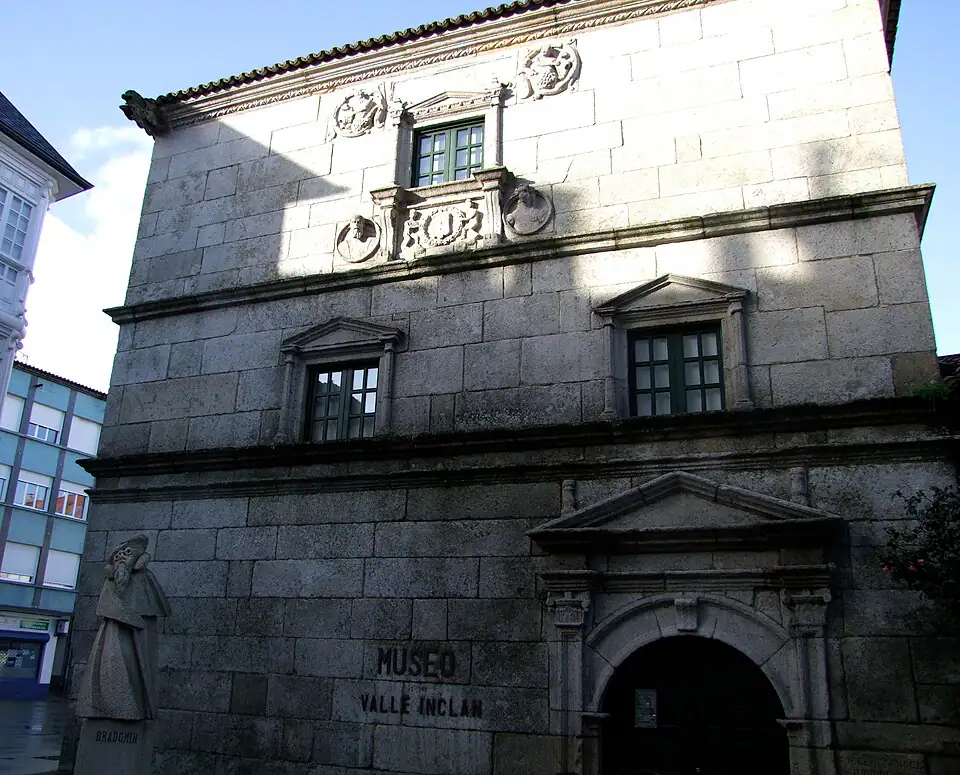
Torre de Bermúdez (Museo Valle-Inclán)
Frequently asked questions
How old is it?
It was built in phases from the late 14th century to 1825.
Which chapels stand out?
The Sacro chapel, with a rib vault, and the Alba chapel, from the late 15th century.
Sources (2)
- Turismo de Galicia (Xunta): Igrexa de Santiago da Pobra do Deán (accessed 19 Nov 2026)
- Concello de Ribeira, Turismo: Camino de Santiago «El Origen» (accessed 19 Nov 2026)
- © amaianos (CC BY 2.0)