How much does the Camino de Santiago cost in dollars?
Camino de Santiago cost in US dollars: rooms, meals, flights and the organized trip from Sarria or Tui, with 2026 reference prices.
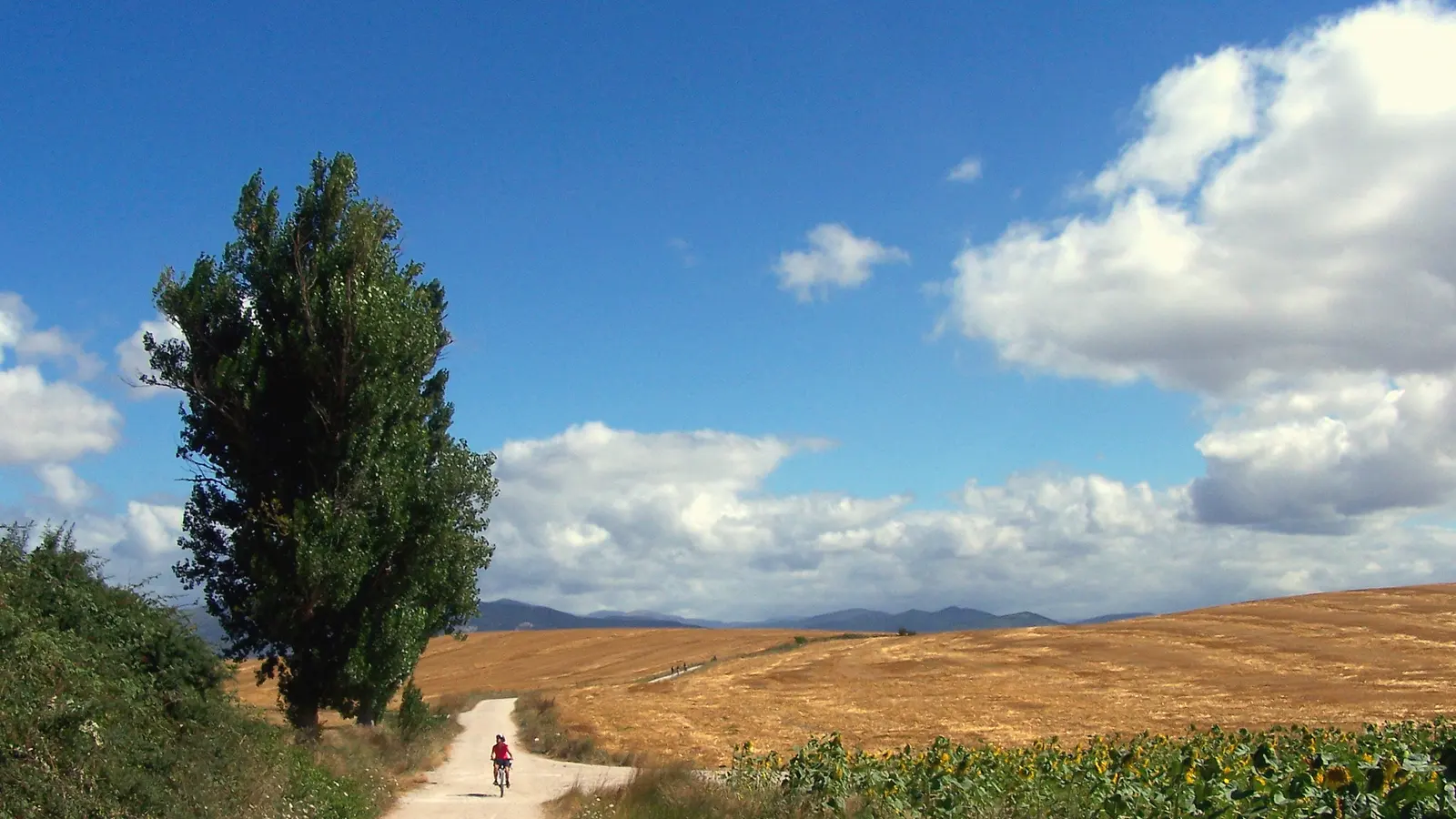
Photo: Josef Grunig, CC BY-SA 2.0
Saint-Jean-Pied-de-Port to Santiago de Compostela · 33 stages · 765 km
About 23.2 km a day on average. It adds up to 11,120 m of ascent, with a highest point of 1,512 m. Data checked in .
We organise it for you: bed, luggage and support Plan my Camino
We add the km plus 1 km for every 50 m of ascent.
The Camino Francés is the classic route: it crosses the Pyrenees, Navarre, La Rioja, the Castilian plateau and the mountains of León before entering Galicia at O Cebreiro. It has the most pilgrims, the most accommodation and the best waymarking.
Distances and elevations calculated on the official route; they may vary slightly with your GPS.
Choose where you start and how many days you have. We split the stages for you.
From the town you pick in “Plan your days” to Santiago.
A special year to walk the Camino. With a little planning, any month works.
Our favourites: May, June and September. Our favourite windows: May–June and mid-September to October. Good weather and real Camino spirit.
January Fairly busy
Cold and rainy, short days. The Holy Door has just opened and the trails are calm: ideal if you seek silence.
February Quiet
Cold and rainy. Few pilgrims and a quiet welcome; pack good rain gear.
March Peak
Cool, first blossoms. Quiet most of the month; Holy Week brings a lively atmosphere.
April Busy
Springlike, some showers. Spring wakes the Camino up; after Easter the buzz grows.
May Busy · Recommended
Mild and green. Green fields and long days: one of the best months to walk.
June Busy · Recommended
Mild, long days. Good weather and plenty of light: the Camino at its best.
July Peak
Hot on the Meseta, mild in Galicia. European Youth Pilgrimage (15–18 July) and the feast of St James: Santiago in full celebration.
August Busy
Hot; cool mornings in Galicia. Holiday month: great atmosphere; start early to beat the heat.
September Busy · Recommended
Warm and settled. From mid-month, gentler heat and a wonderful atmosphere.
October Fairly busy
Mild and autumnal. Golden autumn, mild temperatures and a little less busy: a gem.
November Quiet
Cool and rainy. An intimate Camino and autumn landscapes; some places close.
December Quiet
Cold and rainy. Christmas in Santiago and the close of the Holy Year: a very special finale.
Atmosphere estimated month by month from the Pilgrim’s Office monthly figures; not official data.
Pick where you start and we will tell you if you reach 100 km.
The official rule: at least 100 continuous km on foot to Santiago, with a dated stamp at the start and end of every stage.
April–June and September–October are the most comfortable months. July and August bring heat on the plateau and full accommodation; in winter the Roncesvalles and O Cebreiro passes can have snow.
Saint-Jean-Pied-de-Port has a train from Bayonne (connections with Biarritz, Paris and Hendaye). From Pamplona there are buses and shared taxis. If you start in Sarria, there are trains from Madrid and A Coruña and buses from Lugo.
With a room of your own in a guesthouse or apartment and the pilgrim menu, €60–90 a day per person. Organized with an agency, luggage transfer included, somewhat more.
Free, no obligation · Reply within 24 h
31 to 35 walking days for the whole route at 23–25 km a day. From Sarria, 5 days.
Yes, especially between Sarria and Santiago and in high season. Book every village before you leave or have it organized for you.
The first, Saint-Jean to Roncesvalles, with 1,370 m of ascent. Then the climb to O Cebreiro and the descent from Foncebadón to Ponferrada.
765 km from Saint-Jean-Pied-de-Port, in 33 stages. Many start in Roncesvalles, Pamplona, Burgos or León to shorten it, and the most popular start is Sarria, 115 km from Santiago, just over the minimum for the Compostela.
In the classic stage towns: Portomarín, Palas de Rei, Arzúa and O Pedrouzo, with guesthouses, hotels and rural houses. Melide is a good alternative to Palas de Rei. It is the most in-demand stretch of any Camino, so book all five nights in one go.
No: anyone who walks regularly can do it. Stages run 18 to 29 km with short climbs and no big mountain passes. The toughest is Palas de Rei – Arzúa because of its length; a few weeks of training helps prevent blisters.
25.1 km, via Gonzar, Castromaior and Ventas de Narón. It has the most climbing of any stage from Sarria, 520 m.
18.4 km, via A Calzada, Salceda and Santa Irene. It is the shortest stage from Sarria and the usual last night before arriving.
20.2 km, via Amenal, Lavacolla and Monte do Gozo. It ends in the Praza do Obradoiro, facing the cathedral.
Stages, where to sleep and tips in your inbox.
Automatic assistant