Stage 30 / 33 · Camino Francés · Galicia
Portomarín to Palas de Rei
The stage from Portomarín to Palas de Rei is 25.1 km, about 7 h on foot, with 520 m of total ascent and 310 m of descent.
| Distance | 25.1 km |
|---|---|
| Estimated time | 7 h |
| Elevation gain / loss | +520 m / −310 m |
| Difficulty | Demanding |
| Highest point | 725 m |
| Lowest point | 345 m |
| Villages with services | 8: Portomarín, Gonzar, Castromaior, Hospital da Cruz, Ventas de Narón, Ligonde, Eirexe, Palas de Rei |
| Longest stretch without services | 8.1 km |
| Updated |
Reviewed:
We organise it for you: bed, luggage and support Plan my Camino
Travelling as a group? Rooms close together, one quote.
Today on the Camino
Finding where you are…
Next village—
To Palas de Rei—
You’ve arrived: log the stage
Log stageBeds nearby
Need a taxi or luggage transfer? We’ll arrange it
Where to stay in Palas de Rei
You pay at the property.
Pilgrim hostels in Palas de Rei(2)
No reservations: beds go first come, first served. A guaranteed bed every night? Plan your Camino
Elevation profile
400 m600 m800 m ▲ 725 m PortomarínPalas de Rei
Official route and distance by the Xunta de Galicia; elevations from a digital terrain model.
Map
Zoom in to see more places to stay
What you will see on the way
A climb through Gonzar, Castromaior (a pre-Roman hillfort excavated a step from the path) and Hospital da Cruz to the Sierra de Ligonde. It is 25.1 km with 520 m of climbing, almost all in the first 13 km up to the 725 m high point; from Gonzar the path runs alongside the road.
History of Palas de Rei
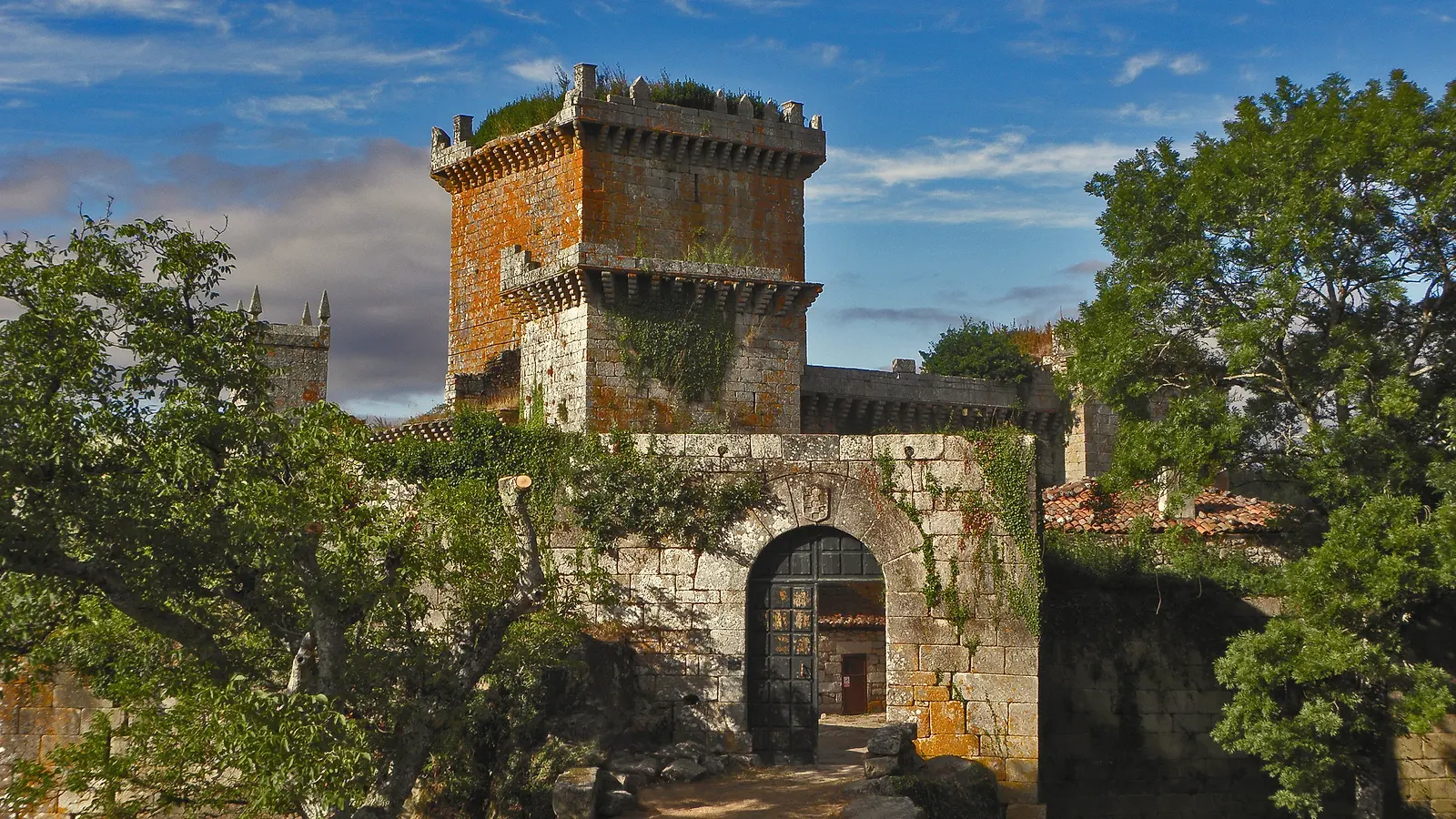
Palas de Rei is a town in Lugo on the Camino Francés that was already a stage end in the 12th-century Codex Calixtinus, where it appears as “Pallatium Regis”. Its municipality includes Pambre Castle, from the late 14th century, and the church of Vilar de Donas, linked to the Order of Santiago.
A royal-palace name, a castle that withstood a revolt and a soldier who sought forgiveness by caring for pilgrims.
What not to miss in Palas de Rei
- Castelo de Pambre: medieval fortress of the Ulloa family
- San Salvador de Vilar de Donas: Gothic paintings and tombs of Santiago knights
- San Xiao do Camiño: hamlet of the penitent soldier legend
Origins and the Camino
The name comes from the Latin “Pallatium Regis”, the king’s palace; tradition links it to the Visigothic king Witiza, though there is no documentary proof.
In the Codex Calixtinus the penultimate day ends here and the last runs from Palas de Rei to Santiago. Nompar de Caumont (1417) and Arnold von Harff (1496) also mention it.
Anecdotes, curiosities and legends
Around 1375 Gonzalo Ozores de Ulloa built Pambre Castle, one of the few that withstood the Irmandiño revolt of 1467. Legend says the mouros, Galicia’s mythical underground folk, built it in a single night.
Legend tells that Xiao, a soldier, killed his parents by mistake. Repentant, he cared for pilgrims with his wife until an angel brought him forgiveness; his name lives on in San Xiao do Camiño, just outside town.
Pilgrim tip
Vilar de Donas is a short detour before town; if you want to see inside, check first whether it is open.
Legends & tradition
Hórreos: granaries on stilts
The hórreos beside the farmhouses stored maize so it could dry in the damp Atlantic climate. The flat slabs on top of the legs, called tornarratos, stopped rats and mice from climbing in.
Source: gl.wikipedia.org
Villages along the way
| Village | km | Altitude | Services |
|---|---|---|---|
| Portomarín · Places to stay | 0 | 350 m | BarShopPharmacyATMDoctorWater fountain |
| Gonzar | 8.1 | 560 m | BarWater fountain |
| Castromaior | 9.4 | 600 m | Bar |
| Hospital da Cruz | 11.8 | 680 m | Bar |
| Ventas de Narón | 13.5 | 720 m | BarWater fountain |
| Ligonde | 17.2 | 640 m | BarWater fountain |
| Eirexe | 18.2 | 630 m | BarWater fountain |
| Palas de Rei · Places to stay | 25.1 | 565 m | BarShopPharmacyATMDoctorWater fountain |
© OpenStreetMap
Related guides
Your Camino organized, nothing to worry about
Free, no obligation · Reply within 24 h
Xacobeo 2027 Holy Year: dates and when to book
Do you run a business on this stage?Advertise here