The best time to walk the Camino, month by month
Temperatures, rain, crowds and room availability on the Camino de Santiago from January to December.
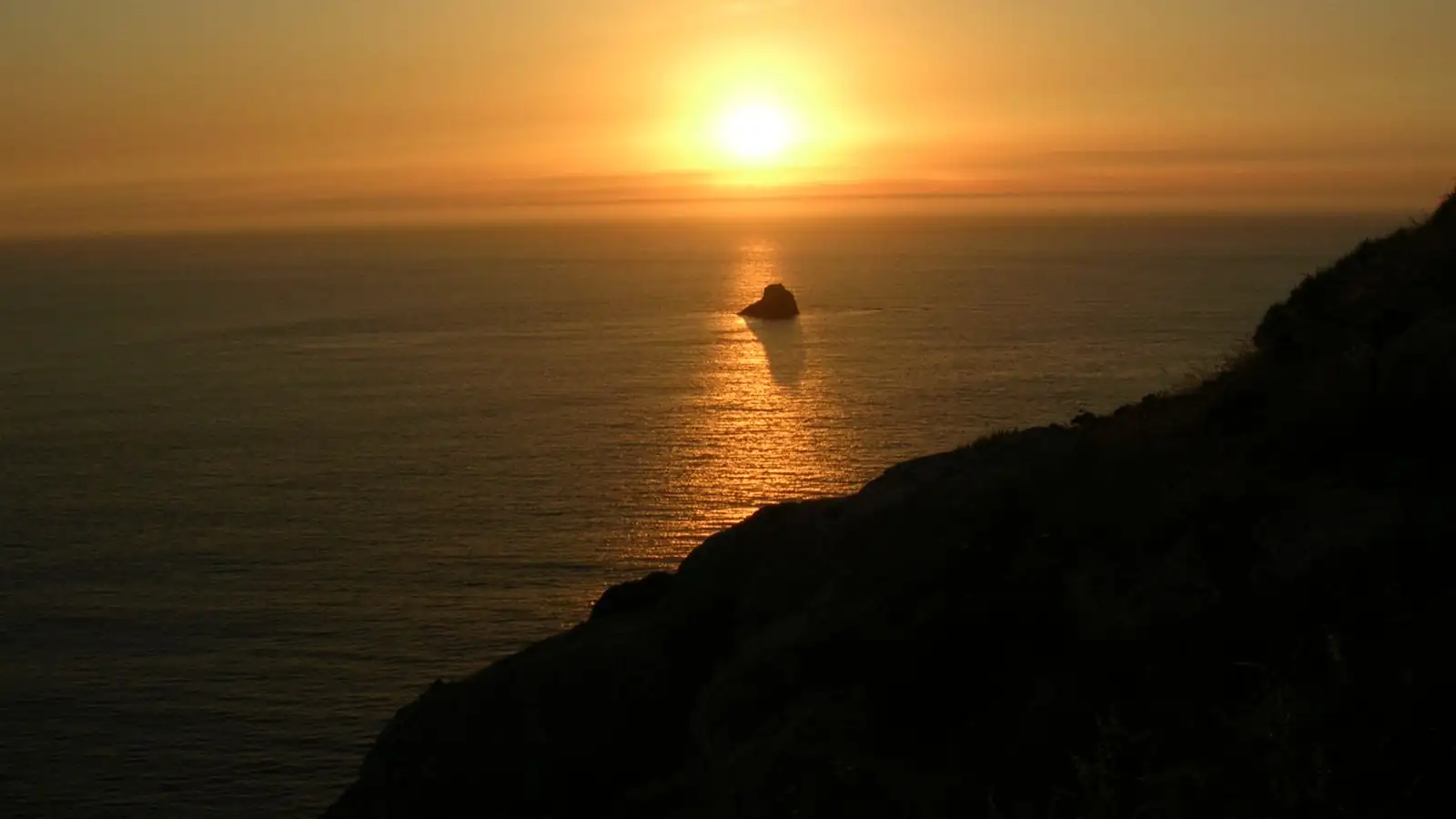
Photo: Profesor Paz, Public domain
Santiago de Compostela to Muxía · 5 stages · 119 km
About 23.8 km a day on average. It adds up to 2,180 m of ascent, with a highest point of 469 m. Data checked in .
We add the km plus 1 km for every 50 m of ascent.
The Camino to Fisterra and Muxía is the only one that leaves from Santiago: it heads for the sea through Negreira, Olveiroa and Corcubión to Cape Fisterra, then on to Muxía. Some 119 km in 5 stages, counting the link between Fisterra and Muxía.
Distances and elevations calculated on the official route; they may vary slightly with your GPS.
Choose where you start and how many days you have. We split the stages for you.
From the town you pick in “Plan your days” to Santiago.
A special year to walk the Camino. With a little planning, any month works.
Our favourite windows: May–June and mid-September to October. Good weather and real Camino spirit.
The Holy Door has just opened and the trails are calm: ideal if you seek silence.
Few pilgrims and a quiet welcome; pack good rain gear.
Quiet most of the month; Holy Week brings a lively atmosphere.
Spring wakes the Camino up; after Easter the buzz grows.
Green fields and long days: one of the best months to walk.
Good weather and plenty of light: the Camino at its best.
European Youth Pilgrimage (15–18 July) and the feast of St James: Santiago in full celebration.
Holiday month: great atmosphere; start early to beat the heat.
From mid-month, gentler heat and a wonderful atmosphere.
Golden autumn, mild temperatures and a little less busy: a gem.
An intimate Camino and autumn landscapes; some places close.
Christmas in Santiago and the close of the Holy Year: a very special finale.
Atmosphere estimated month by month from the Pilgrim’s Office monthly figures; not official data.
April to October. On the Costa da Morte wind and rain arrive fast; carry a warm layer even when the day starts fine.
It begins at Santiago cathedral, so you only need to reach the city by train, bus or plane. To return, there are buses from Fisterra and Muxía to Santiago.
This route does not give the Compostela, because it starts in Santiago. The Concello de Fisterra issues the Fisterrana to walkers who arrive with their credential stamped along the way, at the tourist office or the public pilgrim hostel; Muxía has its own certificate, the Muxiana.
At Olveiroa the path splits: left for Fisterra, right for Muxía. You can do both and join them with a coastal stage of about 30 km, in either direction.
4 days to Fisterra or Muxía; 5 if you do both.
Your old one works if it has empty boxes; otherwise get a new one before leaving Santiago.
It is manageable. The longest stage is Negreira–Olveiroa, about 33 km, which can be split in two.
90 km on foot, in four stages via Negreira, Olveiroa and Corcubión. Carry on to Muxía and the full route totals 119 km. It is the only Camino that starts in Santiago and ends at the sea, by the cape lighthouse.
Tell us your section and month; we handle the rest.
Pilgrims getting ready for the Camino Finisterre–Muxía: share your start date and walk in company.
Stages, where to sleep and tips in your inbox, ready to read offline.
A community that walks with respect: The Pilgrim’s Pact

Automatic assistant


