Stage 15 / 33 · Camino Francés
Castrojeriz to Frómista
The stage from Castrojeriz to Frómista is 23.6 km, about 6 h on foot, with 210 m of total ascent and 250 m of descent.
| Distance | 23.6 km |
|---|---|
| Estimated time | 6 h |
| Elevation gain / loss | +210 m / −250 m |
| Difficulty | Moderate |
| Highest point | 913 m |
| Lowest point | 766 m |
| Villages with services | 4: Castrojeriz, Itero de la Vega, Boadilla del Camino, Frómista |
| Longest stretch without services | 10.4 km |
| Updated |
Reviewed:
We organise it for you: bed, luggage and support Plan my Camino
Travelling as a group? Rooms close together, one quote.
Today on the Camino
Finding where you are…
Next village—
To Frómista—
You’ve arrived: log the stage
Log stageBeds nearby
Need a taxi or luggage transfer? We’ll arrange it
Where to stay in Frómista
You pay at the property.
Elevation profile
800 m900 m1000 m ▲ 913 m CastrojerizFrómista
Waymarked route (OpenStreetMap); official distance: Junta de Castilla y León; elevations from a digital terrain model.
Map
Zoom in to see more places to stay
What you will see on the way
The climb to the Alto de Mostelares (12%) and its brutal descent give the widest view of the Meseta. Once past the descent, the rest is flat. The first bar is in Itero de la Vega at km 10.4, the next in Boadilla del Camino (km 18); both have a shop. Between Boadilla and Frómista lie 5.6 km without services.
History of Frómista
Frómista is a town on the Camino Francés in the province of Palencia, famous for the church of San Martín de Tours, founded as a Benedictine monastery in 1066 by the widowed Queen Mayor and one of the great models of Romanesque architecture in Spain. Pedro González Telmo, the Saint Elmo invoked by sailors, was born here around 1190.
A textbook Romanesque church and a sailors' saint born far inland.
What not to miss in Frómista
- Church of San Martín
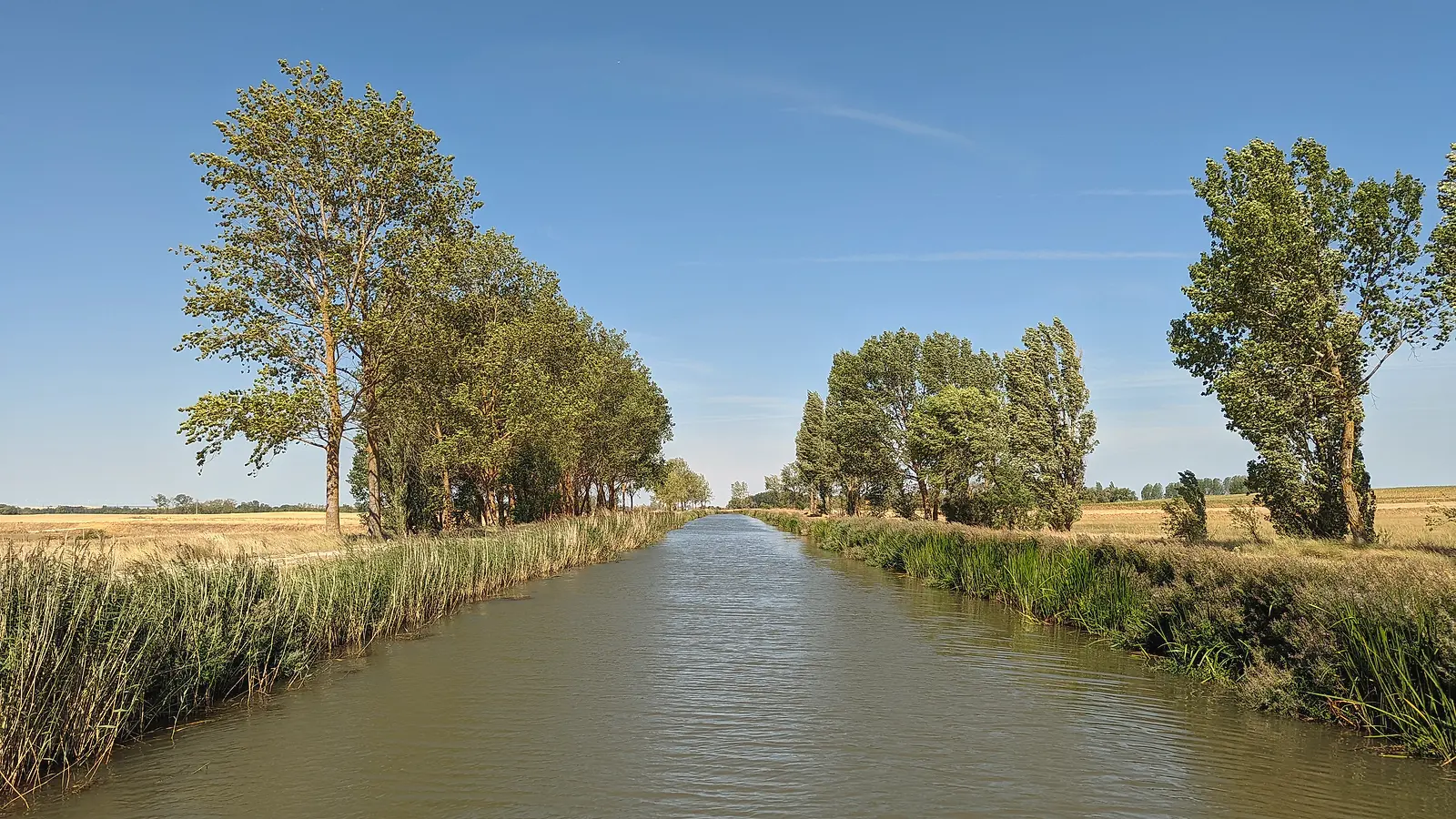
- Quadruple lock: the only one on the Canal de Castilla
- Church of San Pedro: Gothic, with a museum of sacred art
Origins and the Camino
In the early 12th century Queen Urraca gave it to the Benedictines of San Zoilo in Carrión, who ruled that quarter for centuries.
Anecdotes, curiosities and legends
Tradition says that in 1453 the Host stuck to the paten until a man confessed a debt, and the church became known as «San Martín of the Miracle».
Pilgrim tip
Walk around San Martín before going in and look at the corbels under the eaves: animals, faces and figures the stonemasons left for passing pilgrims.
Villages along the way
| Village | km | Altitude | Services |
|---|---|---|---|
| Castrojeriz · Places to stay | 0 | 810 m | BarShopPharmacyATMDoctorWater fountain |
| Alto de Mostelares | 3.8 | 900 m | — |
| Itero de la Vega | 10.4 | 770 m | BarShopWater fountain |
| Boadilla del Camino | 18 | 780 m | BarShopWater fountain |
| Frómista · Places to stay | 23.6 | 785 m | BarShopPharmacyATMDoctorWater fountain |
© OpenStreetMap
Related guides
Your Camino organized, nothing to worry about
Free, no obligation · Reply within 24 h
Xacobeo 2027 Holy Year: dates and when to book
Do you run a business on this stage?Advertise here