Archaeological sites of the Sierra de Atapuerca
An old railway cutting accidentally opened one of the most important archives of human evolution. The Junta de Castilla y León notes that the human settlement of Europe cannot be understood today without the finds of the Sierra de Atapuerca.
Which municipality they are in
The Sierra de Atapuerca is shared by two municipalities. The 1991 decree of the Junta de Castilla y León that declared it a Bien de Interés Cultural, as an Archaeological Zone, places the protected area «in the municipal areas of Atapuerca and Ibeas de Juarros». The Junta's guide to archaeological sites files them under Ibeas de Juarros, where the visitor access centre is; the Experimental Archaeology Centre (CAREX), on the other hand, is next to the village of Atapuerca, which presents the sites as one of its two World Heritage properties.
A railway cutting and half a century of digging
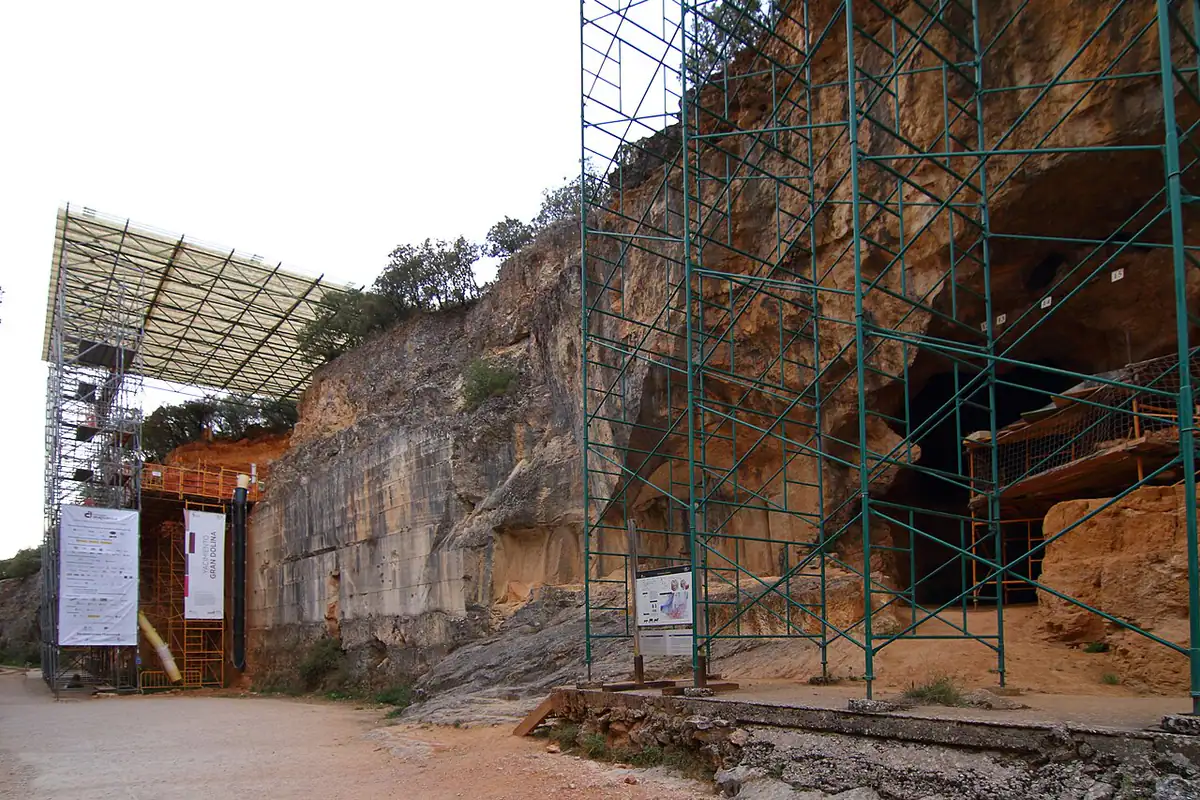
In the late 19th century a cutting was opened through the sierra for a mining railway meant to carry iron and coal from the Sierra de la Demanda to Burgos. Digging it exposed cavities filled with sediment; according to the council leaflet, part of the deposits was lost in the works, but without them they would have gone unnoticed. Once the railway was abandoned, the site was used as a quarry until palaeontological and archaeological research began in the late 1970s, according to the Junta.
The leaflet recalls some milestones: in 1972 the Edelweiss caving group discovered the Galería del Sílex; in 1973 J. M. Apellániz began digging the Portalón of Cueva Mayor; and the anthropologist Emiliano Aguirre worked for many years in the Sima de los Huesos. In 1994 the fossils of Homo antecessor came to light in level TD6 of the Gran Dolina, according to Atapuerca town council. The sites have been on the World Heritage List since 2000.
In 2007–2008 the Sima del Elefante yielded a human jaw between 1.1 and 1.4 million years old, according to the Junta.
What has been found
At the Gran Dolina, sediments several tens of metres deep span close to a million years. Its TD6 layer yielded remains of a new species, Homo antecessor, about 850,000 years old, with traces of cannibalism that the Junta reads as diet rather than ritual. The Sima del Elefante holds the oldest evidence of human presence in the sierra: stone tools over a million years old and, in the 2007 and 2008 seasons, part of a human jaw and a finger bone between 1.1 and 1.4 million years old, the oldest human in Europe to date according to the Junta. At Galería, human groups butchered deer and horses with Acheulean tools.
Two other famous places lie off the tour. The Sima de los Huesos, a small cave that cannot be visited, has yielded some 7,000 human remains of about thirty individuals from around 350,000 years ago, according to the Junta. The Galería del Sílex was used as a sanctuary some 5,000 years ago. The council leaflet adds a cave bear species described here, Ursus dolinensis, and more than fifty outdoor sites in the sierra and its surroundings.
Visiting
According to the Junta, the sites can only be visited with prior booking, on 947 421 000 (checked in November 2026). The meeting point is the Sites Access Centre (CAYAC), built in 2012 at the exit of Ibeas de Juarros towards Logroño, with an exhibition on the mining railway. The guided route follows the Trinchera del Ferrocarril, where the Sima del Elefante, Galería and the Gran Dolina lie. The Junta recommends starting at the Museum of Human Evolution in Burgos and finishing at the CAREX in Atapuerca, where you can try making fire or knapping stone.
From the Camino Francés
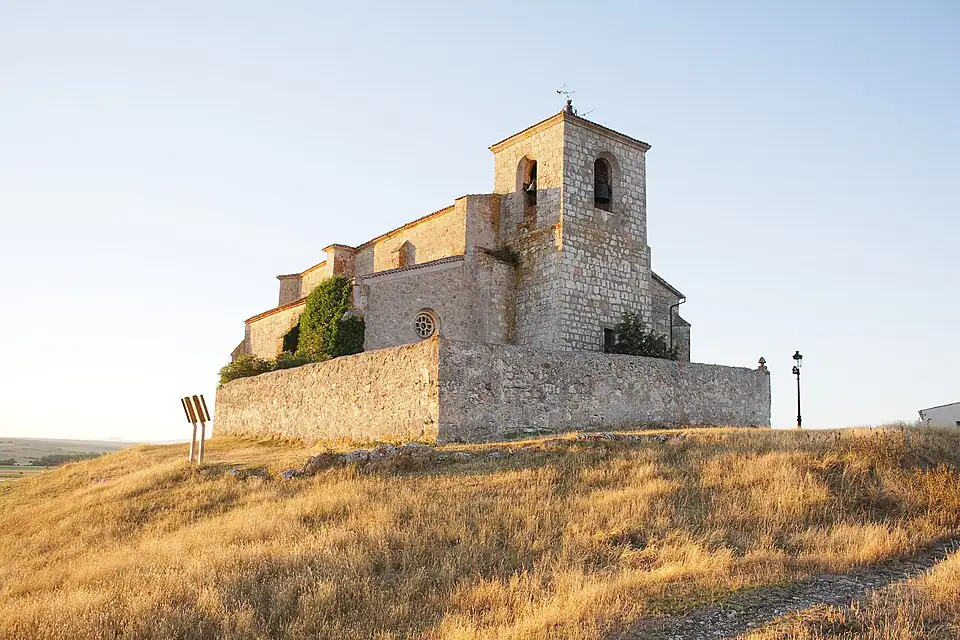
The Camino Francés crosses Atapuerca on the San Juan de Ortega – Burgos stage and then climbs over the sierra; the Junta's guide places the sites at the foot of the Sierra de Atapuerca. In the village, the square dedicated to Homo antecessor marks the way the Camino continues, and the church of San Martín rises above the houses. See the map.
What to see nearby


Frequently asked questions
Are the sites in Atapuerca or in Ibeas de Juarros?
In the Sierra de Atapuerca, shared between both municipalities according to the 1991 decree. The Junta files them under Ibeas de Juarros, where the visitor access centre is; the CAREX is in Atapuerca.
Can you visit without booking?
No: according to the Junta, visits are always by booking (947 421 000, as of November 2026).
What is Homo antecessor?
A human species described from fossils found in 1994 in level TD6 of the Gran Dolina, about 850,000 years old according to the Junta.
Are they World Heritage?
Yes, since 2000; they have also been a Bien de Interés Cultural, as an Archaeological Zone, since 1991.
Sources (6)
- BOE: Decreto 347/1991, Bien de Interés Cultural, Zona Arqueológica «Sierra de Atapuerca» (accessed 20 Nov 2026)
- Junta de Castilla y León, Patrimonio Cultural: Guía de lugares arqueológicos, Burgos (accessed 20 Nov 2026)
- Junta de Castilla y León, Turismo: Atapuerca (accessed 20 Nov 2026)
- Ayuntamiento de Atapuerca: Lugares de interés (accessed 20 Nov 2026)
- Diputación de Burgos, Turismo Burgos: Yacimiento Arqueológico de Atapuerca (folleto del Ayuntamiento) (accessed 20 Nov 2026)
- Diputación de Burgos, Turismo Burgos: Centro de Acceso a Yacimientos, CAYAC (folleto del Ayuntamiento) (accessed 20 Nov 2026)
- © Malopez 21 (CC BY-SA 4.0)