
Church of San Juan
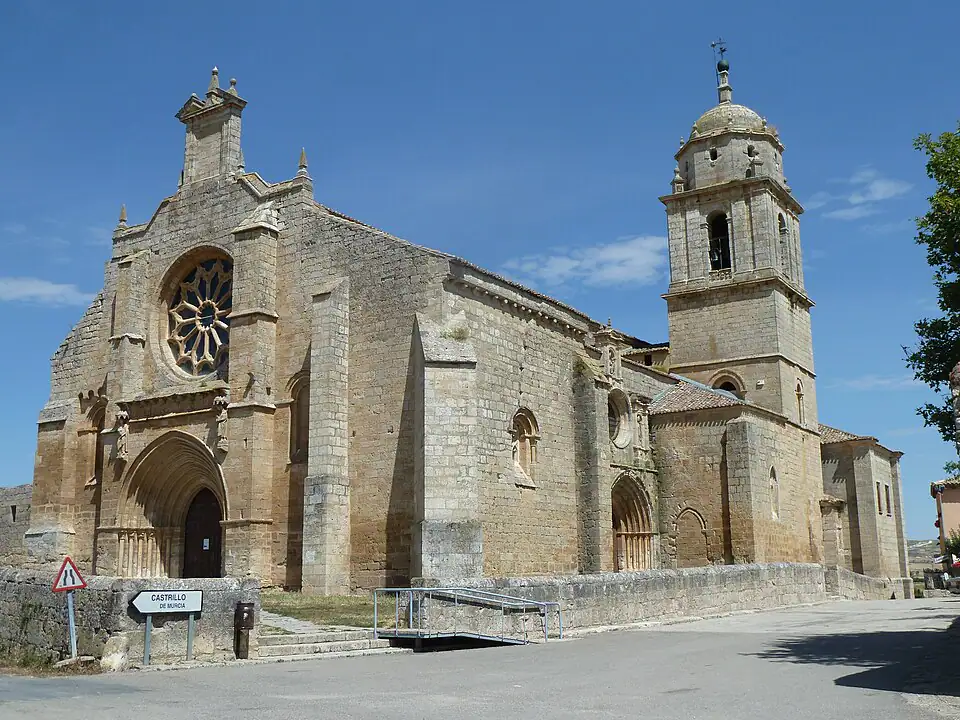
It is the last church pilgrims pass in Castrojeriz, near the old west gate. For the Diputación de Burgos it is the town’s most slender church and one of the finest hall churches in the province.
A merchants’ church
According to the Diputación de Burgos, San Juan reflects a time of prosperity and the trading links of Castrojeriz’s leading families with Italy and the Low Countries. From its 13th–14th-century fabric it keeps the polygonal apse, the tower and the cloister; between the late 15th and early 16th centuries the naves were rebuilt as a hall church, three naves of equal height on slender clustered piers without capitals, carrying rib vaults. The Junta de Castilla y León adds that the church was originally Romanesque.
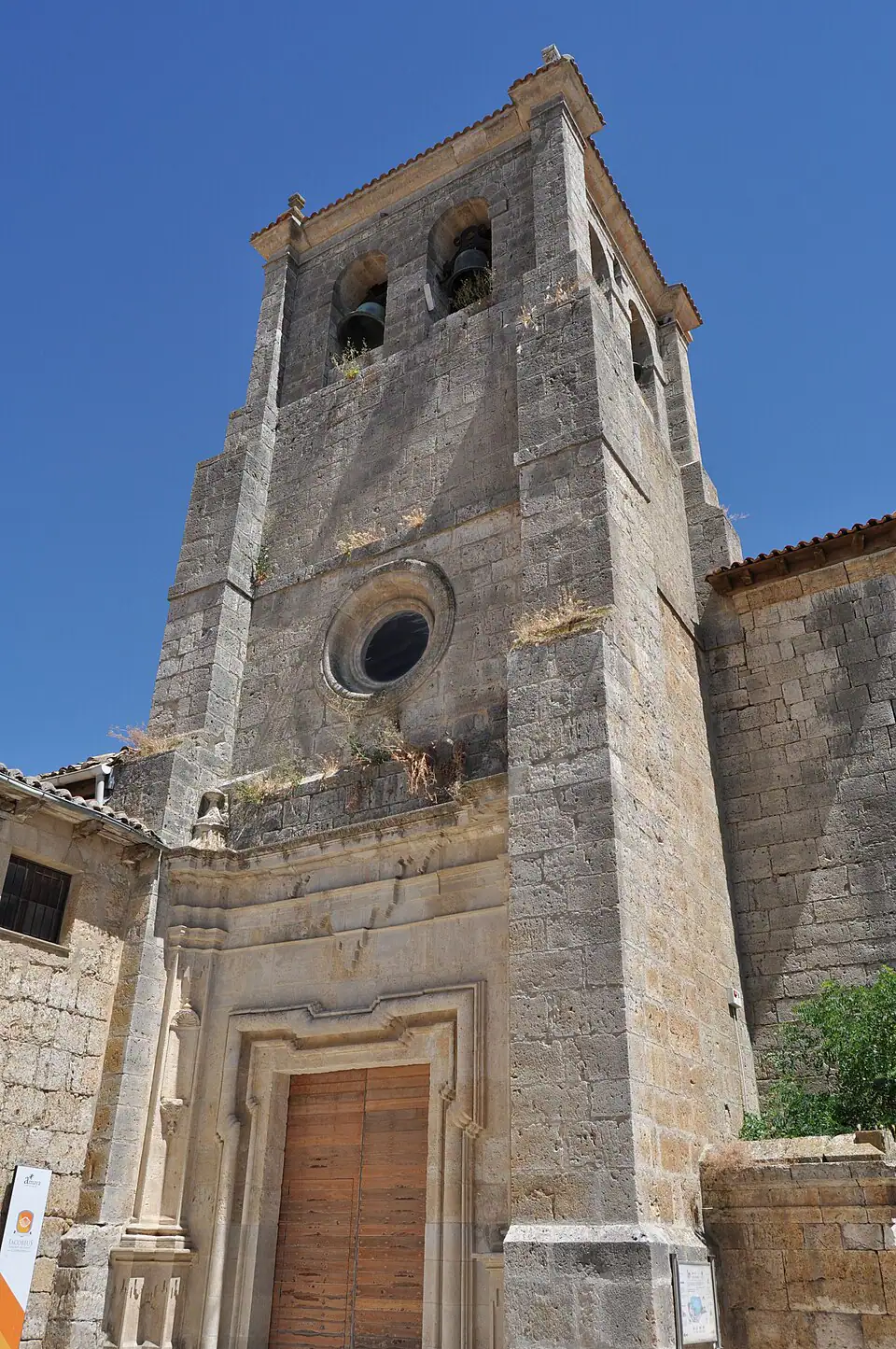
Outside it is plain ashlar with two almost undecorated doors. The tower keeps Romanesque remains in its two lower stages; the three upper ones are pointed Gothic, topped by four pyramidal spires (Diputación).
Santa Ana, the tapestries and the cloister
The Santa Ana chapel, founded by the Castro-Mújica family, has a Plateresque altarpiece with reliefs of the life of the Virgin by Juan de Villarreal, from the mid-16th century, and the family tombs, among them that of Diego de Mújica, canon of the collegiate church. The church displays sacred art and Flemish tapestries designed by Cornelius Schut (Diputación).
Sources date the cloister differently: the Diputación places it in the 13th century; the Junta dates it to the 14th and notes three surviving walks and a Mudéjar ceiling, while its town page calls it 15th-century Gothic. San Juan has been a Bien de Interés Cultural since 29 June 1990 (Wikidata, P1435).
Its three naves rise to the same height on slender piers without capitals.
Getting there from the Camino Francés
San Juan stands at the end of the calle Real; nearby are the ruins of the old hospital of the same name. The Camino Francés crosses Castrojeriz end to end along the calle Real: the Hornillos del Camino → Castrojeriz stage ends here and the Castrojeriz → Frómista stage leaves westwards. Find it on the map.
What to see nearby
-
ChurchProtected heritage (BIC)
Iglesia de Nuestra Señora del Manzano
Frequently asked questions
What is a hall church?
A church whose naves are all the same height; San Juan has three, from the late 15th and early 16th centuries.
What stands out inside?
Juan de Villarreal’s Plateresque altarpiece in the Santa Ana chapel and the Flemish tapestries designed by Cornelius Schut.
Sources and review
- Diputación de Burgos (Turismo Burgos): Castrojeriz, guía accesible (PDF) · accessed 26 Nov 2026
- Turismo Castilla y León (Junta): Castrojeriz, Ruta 7 Camino de Santiago · accessed 26 Nov 2026
- Turismo Castilla y León (Junta): Castrojeriz · accessed 26 Nov 2026
- Wikidata Q42524888: Iglesia de San Juan (P1435 Bien de Interés Cultural) · accessed 26 Nov 2026
- © Carlospalacios · CC BY-SA 4.0