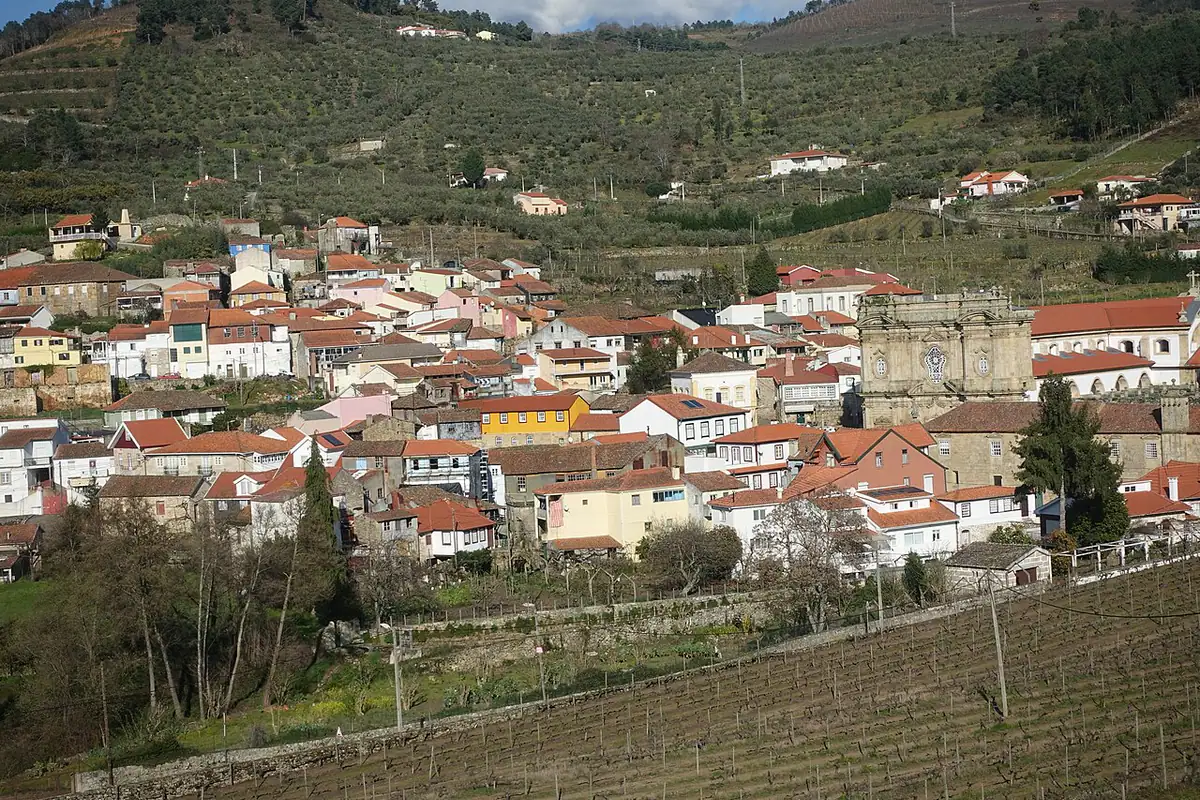
Terras de Cister (GI)
South of the Douro, between ranges over a thousand metres high and the Távora and Varosa valleys, the Terras de Cister geographical indication covers white, rosé and red mountain wines. Its name recalls the Cistercian monks who, according to the specification, planted the first vines there.
What the wines are like
The specification (caderno de especificações) describes fresh wines with delicate aromas and structure, high natural acidity, minerality and low alcohol; they must reach at least 10.0 % vol. Whites are citrine, with a discreet, mineral aroma of citrus and white fruit; rosés smell of fresh fruit, raspberry and red berries, with high, vibrant acidity; reds, light ruby in colour, are light, soft and fresh.
Mountain viticulture
Vineyards are «estremes», not mixed with other crops, low-trained as goblet or cordon. Soils are mainly granitic, light, sandy-clay and acid, with little organic matter and plenty of potassium and phosphorus; the specification credits them with the wines’ mineral character and natural acidity. The maximum yield is 120 hectolitres per hectare, and the list allows 83 varieties, including Malvasia Fina, Gouveio, Cerceal, Touriga Nacional and Tinta Roriz (Aragonez).
According to the specification, Cistercian monks settled in the region in the 12th century, built monasteries and churches and planted its first vines.
Between the Távora and the Varosa
The zone lies in the Viseu district of north-east Portugal, ringed by the Serra de Santa Helena (1,102 m), Monte Raso (851 m) and the Serra da Nave–Leomil (1,015 m). This triangle of mountains shields it from humid coastal air and harsh continental winds, and the Távora and Varosa rivers shape its landscape.
The climate is temperate continental: fairly hot, dry summers with wide day–night temperature swings, and long cold winters with frequent, sometimes late frosts. Rainfall is moderate, and fog rises from the Távora valley. The zone takes in Tarouca, Moimenta da Beira, Penedono and Sernancelhe in full and the parts of Armamar, Lamego, São João da Pesqueira and Tabuaço that are not in the Douro Demarcated Region.
Porto and the Camino Portugués
No stage town lies inside the zone, which is inland, south of the Douro. The nearest is Porto, the starting point of the Camino Portugués, which is not part of the indication. Before the Porto–Vilarinho stage you can visit the Sé and read up on the history of Porto.
Protection
The indication was created in Portugal by Portaria n.º 151/2012 of 18 May. Its name is not a place name but a name traditionally used to identify these wines, which EU rules allow. The eAmbrosia register lists it under file number PGI-PT-02351, protected since 2 March 2017 and entered in Official Journal L 2023/2173 of 17 October 2023. Control and certification are by the Comissão Vitivinícola Regional de Távora-Varosa, based in Tarouca, which approves labels in advance.
Frequently asked questions
Why is it called «Terras de Cister»?
After the Cistercian monks who, according to the specification, settled in the region in the 12th century and planted its first vines.
What are these wines like?
Fresh, with high natural acidity, minerality and low alcohol; the reds are light and soft.
Is Porto in the zone?
No. The zone is in the Viseu district, south of the Douro; Porto is the nearest stage town.
Can the wine be made outside the zone?
Only case by case, with the certifying body’s authorisation, in wineries no more than 15 km from the indication’s boundary.
Sources (5)
- IVV: Caderno de especificações IG «Terras de Cister» (accessed 20 Nov 2026)
- IVV: página do documento «Terras de Cister» (accessed 20 Nov 2026)
- IVV: Nova Indicação Geográfica Protegida «Terras de Cister» (2012) (accessed 20 Nov 2026)
- IVV: Cadernos de especificações (lista oficial) (accessed 20 Nov 2026)
- Comisión Europea, eAmbrosia: «Terras de Cister» (PGI-PT-02351) (accessed 20 Nov 2026)
- © Joseolgon (CC BY 4.0)