Casa La Galana (Sestao)
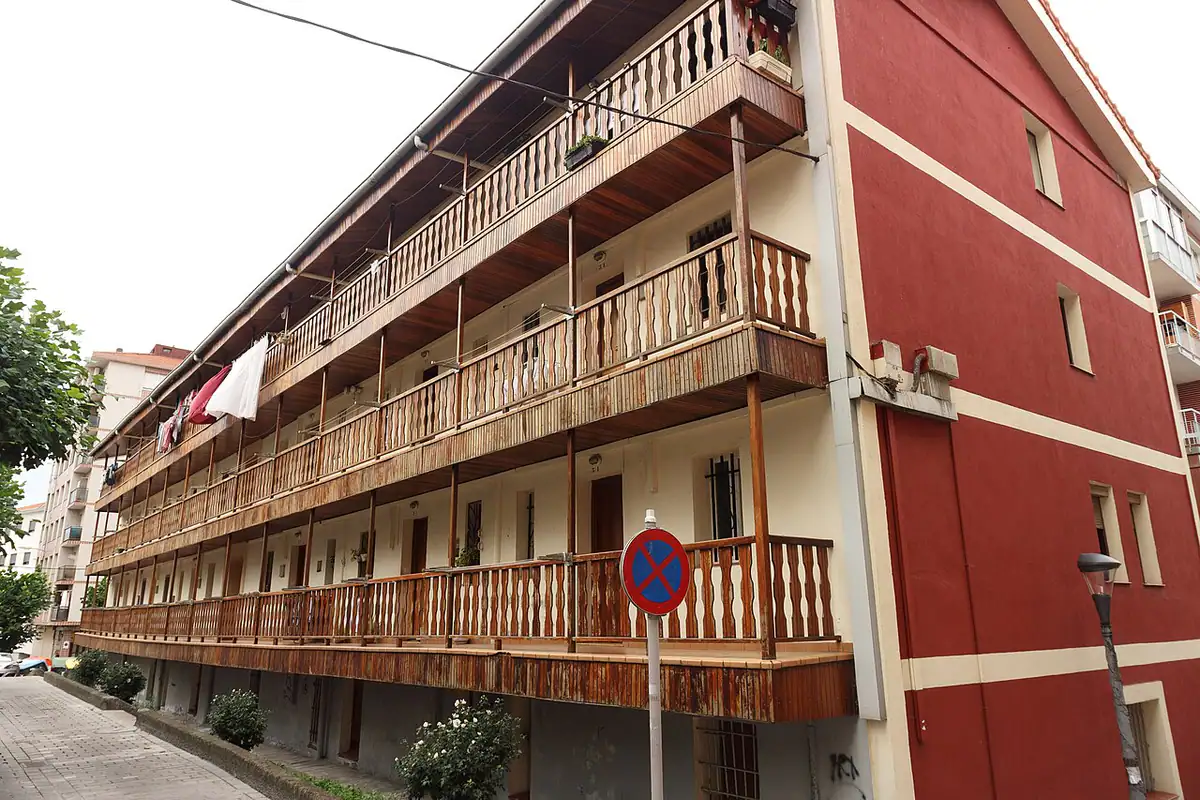
Three long wooden balconies run across the front of La Galana, a workers' house from 1892. According to the Basque Government, it is the last survivor of the workers' «corridor houses» it lists in Barakaldo and Sestao.
Workers' housing
In the last quarter of the 19th century, the growth of large iron and steel works on the Left Bank of the Nervión, such as Altos Hornos de Bilbao, La Vizcaya or La Iberia, brought housing for a working population that grew as fast as the demand for labour. Employers built near the factories to settle their workers and keep production going without them needing transport.
But, as the Basque Government notes, demand for decent housing outstripped supply: there was substandard housing, epidemics and social conflict, with two or even three families in rooms with poor hygiene. The local bourgeoisie, backed by the big industrialists, developed several housing types, all sparsely decorated and making intensive use of the plot.
One of them was the «corridor house», with an average floor area of no more than 50 m², halfway between a workers' barracks and a traditional dwelling. There were several examples: the Zunzunegui houses and those in calle la Bomba in Barakaldo, or the house of la Punta and La Galana in Sestao.
A singular building
La Galana is the last surviving example of these houses, which is why the Basque Government gives it the value of a unique heritage reference. It was built in 1892 to a design by Francisco Berriozabal, the best-known master builder of neighbouring Portugalete, with a taste for the eclectic style.
It has a wide rectangular plan, 38 metres long and 9.5 deep, with a ground floor, three upper floors and an attic. Its distinctive feature is the three continuous wooden balconies, both balustrade and posts. The flats are reached by narrow stair cores leading up to these corridors, where the front doors open. Each flat has two or three interior bedrooms, a living room and a kitchen.
The last survivor of the corridor houses listed by the Basque Government.
Visiting
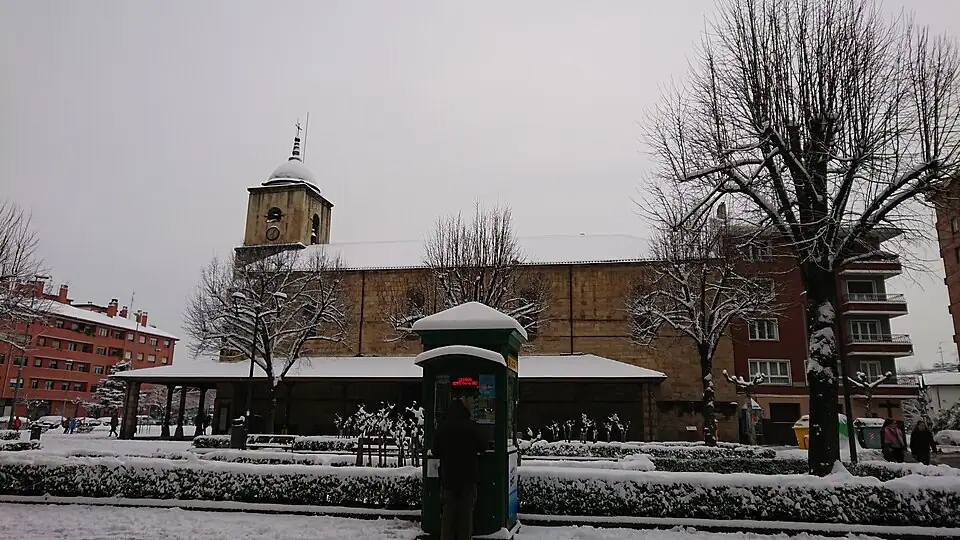
It is a residential building: it can be seen from the street. As of November 2026 no official source announces interior visits. Sestao also keeps Blast Furnace no. 1 of Altos Hornos de Vizcaya and the church of Santa María.
On the Camino del Norte
The house appears in the heritage inventory of the Camino del Norte that the Basque Government publishes for the stage from Bilbao to Portugalete. The stage guide brings the Camino into Sestao at km 17.8 and takes it along Gran Vía J. A. Aguirre y Lekube to the town hall, and from there, by Chávarri and Sotera de la Mier streets, to Portugalete. See La Galana on the map.
What to see nearby


Frequently asked questions
What is a corridor house?
A type of late-19th-century workers' housing, with flats averaging no more than 50 m², reached by open corridors; the Basque Government places it between a barracks and a traditional dwelling.
Who designed it?
Francisco Berriozabal, a master builder from Portugalete, in 1892.
Sources (2)
- Gobierno Vasco, Patrimonio Cultural: Camino de la Costa, Casa La Galana (Sestao) (accessed 20 Nov 2026)
- Gobierno Vasco: Camino de Santiago, tramo Bilbao–Portugalete (PDF) (accessed 20 Nov 2026)
- © Ebaki (CC BY-SA 4.0)