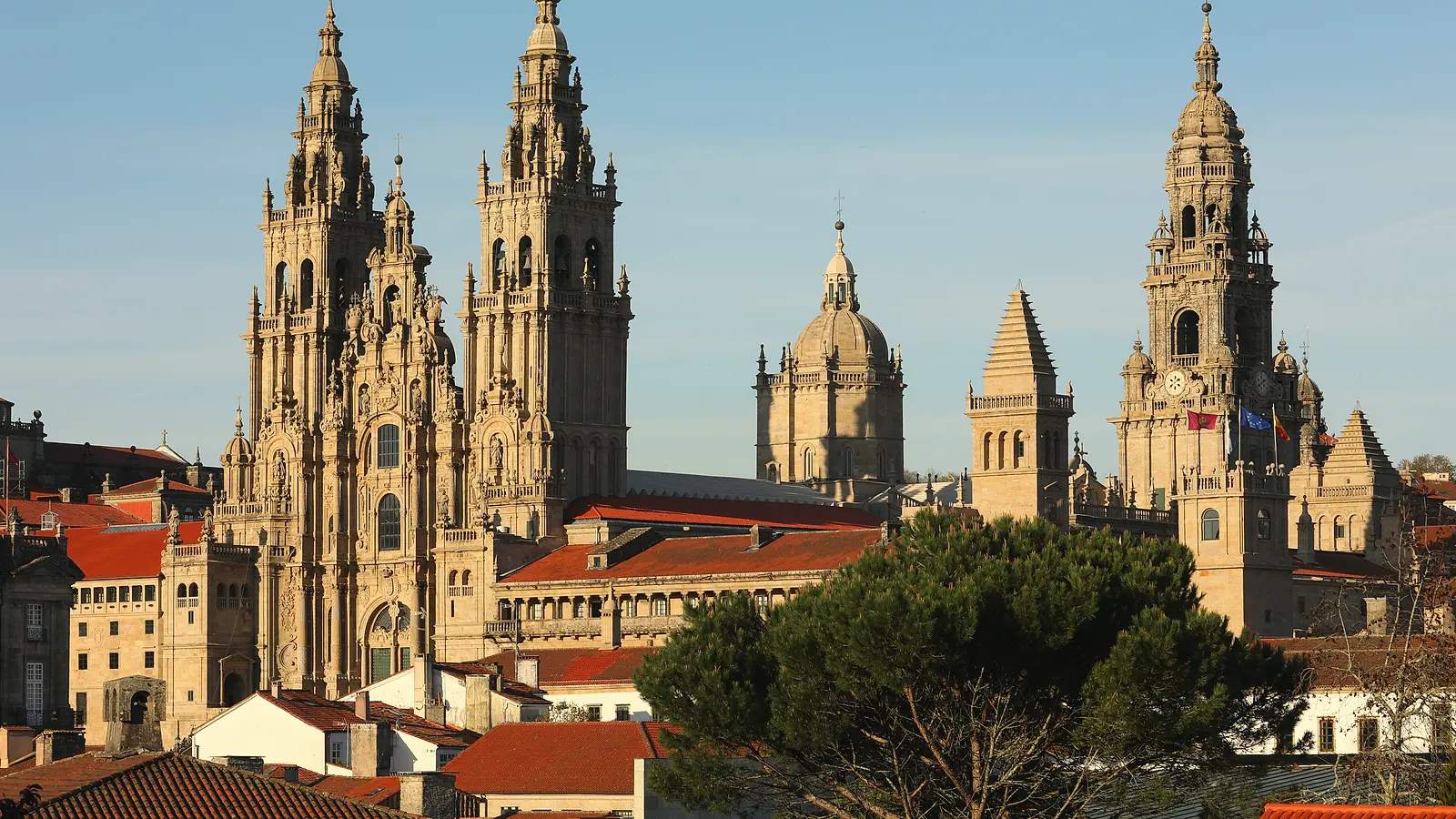
History of Santiago de Compostela
Santiago de Compostela, capital of Galicia, is the goal of the Camino de Santiago, and its cathedral holds the tomb attributed to the apostle St James the Great, found, according to tradition, in the early 9th century. Its old town has been a UNESCO World Heritage Site since 1985, and the Camino since 1993.
A tomb found in a forest, a cathedral that survived Almanzor and a square where every Camino ends.
Origins and the Camino
Tradition says Bishop Teodomiro of Iria recognised the Apostle’s tomb in the Libredón forest after the hermit Paio alerted him, and King Alfonso II ordered the first church.
In 997 Almanzor sacked the city, but the tomb survived. The Romanesque cathedral was begun in 1075; Master Mateo dated the Pórtico da Gloria 1188, and the Obradoiro façade was carved between 1738 and 1747.
Anecdotes, curiosities and legends
Legend tells that the disciples Athanasius and Theodore brought the Apostle’s body in a stone boat. Queen Lupa sent them to the Pico Sacro, home of a dragon, and gave them wild oxen that, once tamed, pulled the cart to Compostela.
Tradition holds that Almanzor carried the cathedral bells to Córdoba on the backs of Christian captives, and that in 1236 Ferdinand III ordered them returned.
What not to miss in Santiago de Compostela
- Cathedral and Pórtico da Gloria
- Praza do Obradoiro: Baroque façade where all routes arrive
- Hostal dos Reis Católicos: former royal pilgrim hospital
Pilgrim tip
2027 is a Compostela Holy Year because 25 July falls on a Sunday, and only in Holy Years is the Holy Door on Praza da Quintana opened.