November 3, 2026 · 3 min read
Who was Saint James the Apostle? Life and legend
Who Saint James the Great was, how he died, what tradition says about his arrival in Galicia, and why his tomb gave rise to Compostela and the Camino.
Reviewed by the Xacobea team · November 2026
Saint James the Apostle, also called Saint James the Great (Santiago in Spanish), was one of the twelve apostles of Jesus of Nazareth. He gives his name to the city of Santiago de Compostela and to the Camino that leads there. Here is what the ancient texts say and what tradition tells, kept apart so you know which is which.
What the texts say
- He was the son of Zebedee and the brother of John the Evangelist. Both were fishermen on the Sea of Galilee when they joined Jesus, according to the Gospel of Matthew.
- He is called “the Great” to tell him apart from the other apostle of the same name, James the Less.
- He died in Jerusalem around AD 44, executed on the orders of King Herod Agrippa I. The Acts of the Apostles records it, and he was the first of the apostles to die for his faith.
What tradition tells
- Before his death he is said to have preached in Hispania. In Padrón, the chapel of Santiaguiño do Monte stands where legend places his preaching.
- After his death, his disciples Athanasius and Theodore carried the body by sea to Iria Flavia, next to Padrón. Under the high altar of the church of Santiago in Padrón lies the Pedrón, the Roman altar stone the boat is said to have been moored to.
- The legend of Queen Lupa says she sent the disciples to the Pico Sacro and gave them wild oxen which, once tamed, pulled the cart with the body to the place of the tomb.
The tomb and the birth of Compostela
In the early 9th century, according to tradition, after a sign from the hermit Paio, Bishop Theodemir of Iria identified the Apostle’s tomb in the Libredón woods. King Alfonso II ordered the first church to be built and travelled from Oviedo to see it: the origin of the Camino Primitivo.
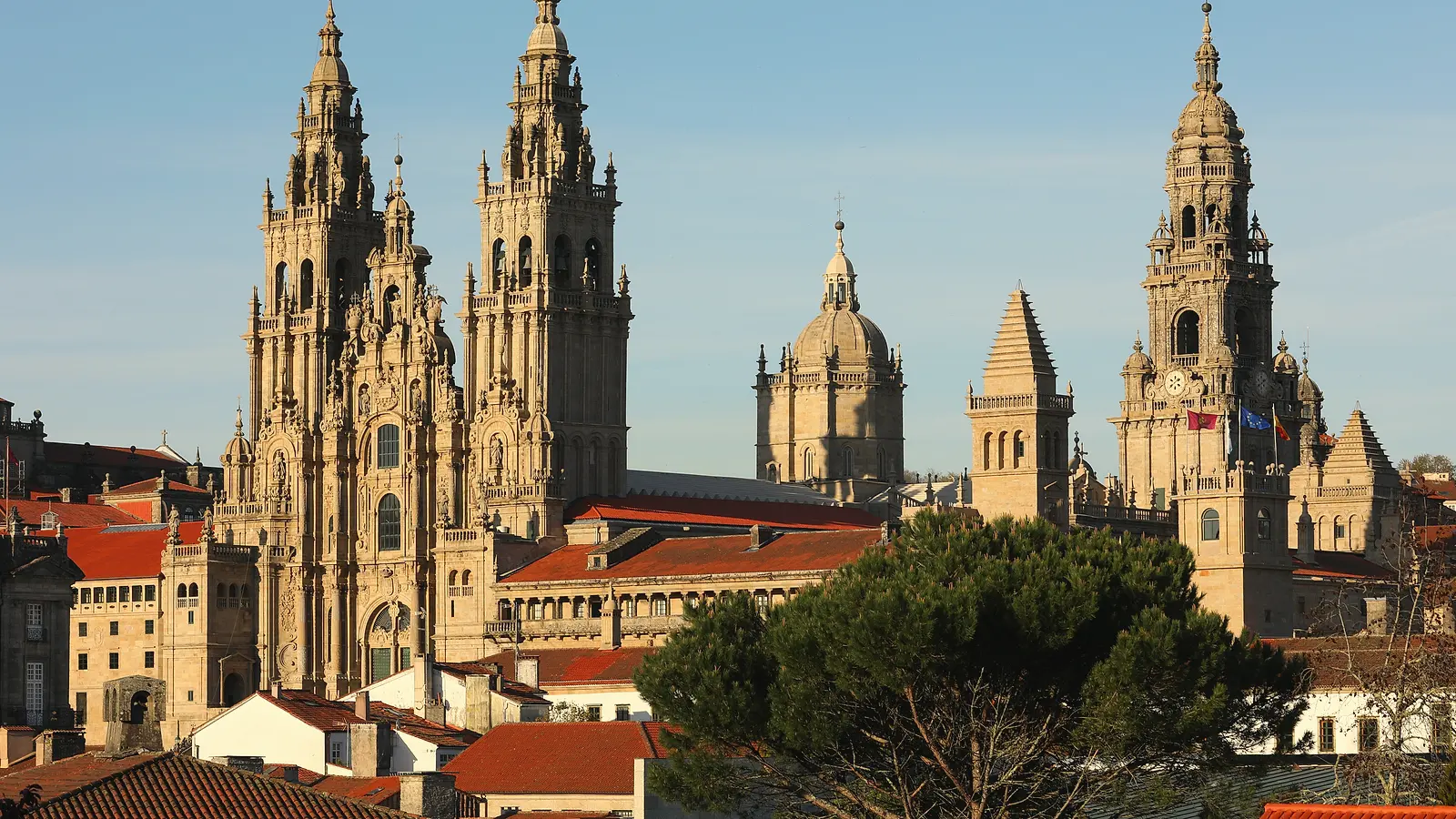
The city grew around the tomb. In 997 Almanzor razed it, but the tomb survived. The Romanesque cathedral was begun in 1075, Master Mateo dated the Pórtico da Gloria in 1188, and the Obradoiro façade was carved between 1738 and 1747. The old city has been a World Heritage Site since 1985, and the Camino since 1993.
How to recognise Saint James on the Camino
You will see him in three ways in churches and portals: as an apostle; as a pilgrim, with staff, hat and scallop shell; and as a horseman. In Arzúa, for example, the church of Santiago holds images of the Apostle as a pilgrim and on horseback.
25 July and the Holy Year
25 July is Saint James’ Day. When it falls on a Sunday it is a Holy Year, and 2027 is one: the cathedral’s Holy Door opens on 31 December 2026. More in Holy Year 2027, and to arrive with your certificate, how to get the Compostela.
Sources: New Testament (Gospel of Matthew 4:21; Acts of the Apostles 12:1–2); Jacobean tradition as recorded by Santiago Cathedral and the Xunta de Galicia; UNESCO for the World Heritage listings.
Frequently asked questions
Who was Saint James the Apostle?
Saint James the Great, one of the twelve apostles of Jesus, son of Zebedee and brother of John the Evangelist. He died in Jerusalem around AD 44.
Why is he buried in Santiago de Compostela?
According to tradition, his disciples brought his body by sea to Iria Flavia (Padrón), and the tomb was identified in the Libredón woods in the early 9th century.
When is Saint James' Day?
25 July. When it falls on a Sunday it is a Holy Year, as in 2027.